Laminotomy Surgery in Tampa, Florida
Endoscopic Laminotomy Surgery With No Metal Required
For patients told they have spinal stenosis, a herniated disc, or bone spurs compressing their spinal cord or nerve roots, surgery can feel like a daunting next step. Many people associate spine surgery with large incisions, lengthy hospital stays, and months of recovery. A laminotomy performed the traditional way does involve a significant procedure. Performed endoscopically, as it is at 360 Ortho & Spine, it is a fundamentally different experience.
Dr. Stefan Prada is a board-certified orthopedic spine surgeon who has performed over 11,000 minimally invasive procedures, including endoscopic laminotomies for patients in Tampa, FL, and across the country. A laminotomy involves removing a small portion of the lamina, the bony plate at the back of the vertebra, to relieve pressure on the spinal cord or nerve roots. In Dr. Prada's hands, this is accomplished through a small endoscopic incision that preserves surrounding muscle and eliminates the need for metal implants or fusion. Most patients complete their recovery in approximately six weeks.
If spinal canal narrowing is at the root of your back or neck pain, a laminotomy may be the precise solution you need. Request a consultation at 360 Ortho & Spine today to find out if this procedure is right for you.

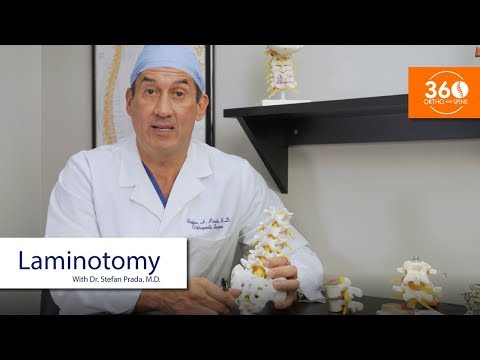
What to Know About Endoscopic Laminotomy Surgery
What Is a Laminotomy Procedure?
The lamina is a flat, bony plate that forms the back wall of the spinal canal. When the canal becomes narrowed by conditions such as spinal stenosis, bone spurs, or a herniated disc, the lamina can contribute to the compression of the spinal cord and nerve roots. A laminotomy removes a small portion of this bony structure to create more space within the canal, relieving the pressure that is causing pain, numbness, weakness, or radiating symptoms.
How Endoscopic Laminotomy Differs from Traditional Surgery
Traditional laminotomy and laminectomy procedures require a larger incision and the retraction of significant muscle tissue to access the spine, leading to considerable postoperative muscle damage, pain and an extended recovery. In some cases, a laminectomy removes the entire lamina rather than just a portion, which can destabilize the spine and may require fusion to compensate.
At 360 Ortho & Spine, Dr. Prada performs laminotomy endoscopically, using a small tube and specialized instruments to remove only the portion of the lamina needed to relieve pressure. There are no metal implants, no fusion, and no large incisions. The surrounding muscle tissue and ligaments are preserved, which greatly reduces postoperative pain, speeds up the recovery process, and maintains normal spine biomechanical motion.
Conditions Treated with Endoscopic Laminotomy
Endoscopic laminotomy may be an appropriate treatment for patients diagnosed with:
- Spinal stenosis: Narrowing of the spinal canal that compresses the spinal cord or nerve roots
- Herniated disc: A displaced disc pressing against the spinal cord or a nearby nerve
- Bone spurs: Bony overgrowths that reduce available space within the spinal canal
- Sciatica: Nerve pain originating in the lumbar spine and radiating down the leg
Endoscopic laminotomy is one of several procedures that fall under the umbrella of spinal decompression surgery at 360 Ortho & Spine, alongside endoscopic foraminotomy and discectomy.
What to Expect During Recovery
Most patients who undergo endoscopic laminotomy with Dr. Prada are back to normal activity within approximately six weeks. Because the procedure is performed through a small incision without disturbing the surrounding musculature, recovery is significantly more comfortable than what patients experience after open surgery. During your consultation, Dr. Prada will walk you through the expected recovery process in detail based on your specific condition and the extent of the procedure.
Frequently Asked Questions
What is a laminotomy, and how does it relieve back pain?
A laminotomy removes a small portion of the lamina, the bony plate at the back of the vertebra, to create more space within the spinal canal. This relieves pressure on the spinal cord and nerve roots, which is the source of pain, numbness, weakness, and radiating symptoms in many common spinal conditions. When performed endoscopically, it requires only a small incision and no metal implants. The muscles and ligaments of the spine are preserved maintaining normal spine motion and biomechanics.
How much does laminotomy surgery cost?
360 Ortho & Spine is a self-pay practice, and the cost of laminotomy surgery varies depending on each patient's specific diagnosis and the scope of the procedure. The best way to understand what your care will involve is to request a consultation with Dr. Prada, who will review your imaging and outline a treatment plan before any cost discussion takes place.
Is endoscopic laminotomy a good option for spinal stenosis?
For many patients with spinal stenosis, endoscopic laminotomy is an excellent minimally invasive option. Dr. Prada removes the portion of the lamina contributing to canal narrowing without placing hardware in the spine, preserving surrounding muscle and significantly reducing recovery time compared to traditional open surgery. During your consultation, Dr. Prada will confirm whether laminotomy or another decompression technique is the best fit for your case.
How do I find a laminotomy surgery doctor near me?
Finding a spine surgeon near you who specializes in endoscopic laminotomy without metal implants can be challenging. Scheduling with Dr. Prada at 360 Ortho & Spine in Tampa, FL, is simple: request a consultation online or call our office directly, and our team will follow up with you promptly. We look forward to helping you find relief.